Cute Farm Animal Line Art SVG
A Designer’s First Look: Clean, Calm, and Craft-Ready
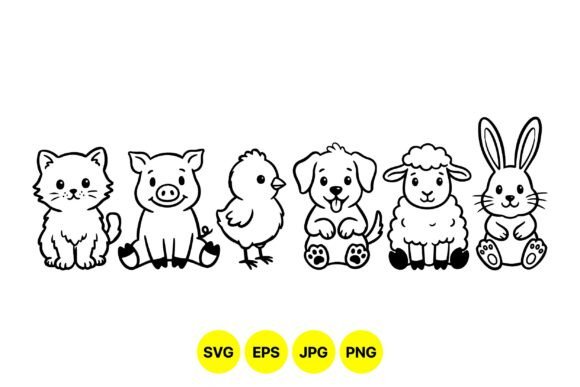
Opening the ZIP folder for Cute Farm Animal Line Art SVG, I felt immediate relief — no cluttered layers, no hidden raster elements, no confusing naming. Just six clean, black-and-white vector outlines: kitten, pig, chick, puppy, sheep, and rabbit, sitting side by side in gentle, balanced rhythm. The minimalist line art style isn’t just trendy — it’s purpose-built for embroidery translation. There’s no heavy shading, no tight internal detail, no overlapping contours that could confuse stitch paths. As a designer who’s spent years converting illustrations to machine embroidery designs, I knew right away this wasn’t just “cute” — it was cooperative.
Where This Design Truly Shines (and Why Your Customers Will Notice)
I recently used Cute Farm Animal Line Art SVG as the centerpiece for a custom embroidered linen tea towel series — think soft sage green fabric, tonal ecru thread, and a small running-stitch border. The result? A quiet, warm, instantly recognizable motif that reads beautifully at 3.5 inches wide. That’s the magic of intentional minimalism: it holds up across scale, fabric texture, and lighting. It works just as well on a baby onesie (using lightweight stabilizer and short satin stitches) as it does on a heavyweight cotton tote bag (where a slightly denser fill stitch adds durability without muddying the lines).
This design naturally fits nursery decor, boutique baby gifts, kindergarten classroom supplies, and even small-batch holiday items like embroidered stocking tags or Easter egg pouches. As an Etsy seller myself, I’ve watched buyers respond strongly to cohesive, gentle illustration styles — especially when they’re easy to personalize. Add a child’s name in a simple sans-serif font below the lineup, and you’ve got a ready-made personalized gift that feels handmade, not mass-produced.
Real Embroidery Considerations: What Works (and What Needs Caution)
Cute Farm Animal Line Art SVG performs best when treated as a line-based embroidery file, not a dense fill-heavy design. That means it adapts beautifully to running stitch outlines, delicate satin borders, or light fill-stitch bodies — but avoid forcing heavy fill stitches into the tiny chick beak or the curved inner ear of the rabbit. Those details are charming on screen, but under thread, they’ll vanish unless scaled appropriately.
Use caution on:
- Curved surfaces like caps or knit hats — test hoop placement first; the horizontal layout may require slight repositioning or cropping for center-front cap embroidery;
- Stretchy fabrics like jersey — always pair with cutaway stabilizer to prevent puckering along those long, clean animal silhouettes;
- Dark or textured fabrics — while the line art is bold, low-contrast thread (e.g., grey on charcoal) can get lost; stick to high-visibility thread colors unless aiming for subtle tone-on-tone;
- Small hoop sizes under 4x4 inches — the full lineup spans comfortably at ~4.2" wide; trimming one or two animals maintains charm without sacrificing clarity.
How It Elevates Your Finished Product — Beyond Just Looks
What makes Cute Farm Animal Line Art SVG more than just another graphic? It builds trust. When customers see clean, consistent line work on a custom sweatshirt or baby blanket, they subconsciously register care, intention, and professionalism — not just speed or automation. That perception directly supports higher perceived value, repeat orders, and word-of-mouth referrals.
For craft businesses and small shop owners, this design also strengthens brand consistency. Use it across product types — a stitched patch on a denim apron, the same outline printed on a matching greeting card, then repeated in a digital embroidery file sold separately — and you create a visual signature that feels intentional, not accidental.
And because it’s rooted in educational, child-friendly themes, it opens doors beyond apparel: printable mockups for digital product listings, nursery wall art bundles, or even simple applique templates for beginner sewists. Its versatility as both a graphics asset and a functional illustration makes it unusually adaptable across your creative workflow.
Practical Designer Notes Before You Stitch
Before cutting fabric or loading your embroidery machine:
- Always run a test stitch on scrap fabric matching your final project’s weight and stretch;
- Check thread color contrast — especially if stitching on off-white or ecru; black thread pops, but navy or forest green can add warmth without harshness;
- Review stitch density in your embroidery software — simplify overlapping anchor points if needed, particularly where animal legs meet the baseline;
- Confirm your hoop size accommodates the full width — or decide which animals to feature based on your product’s real estate;
- Inspect corners and curves at 200% zoom — look for unintended sharp angles or micro-gaps that might need smoothing before digitizing;
- Test how it reads in black-and-white mockups — this design relies on silhouette strength, not color variation;
- Use appropriate stabilizer: tear-away for stable wovens, cutaway for knits or lightweight linens;
- If selling finished items commercially, verify licensing terms — this is a digital embroidery file, so commercial use rights must be confirmed before listing on Etsy or other marketplaces;
- Remember: simplicity doesn’t mean speed — take time to balance tension and thread choice. A well-executed Cute Farm Animal Line Art SVG speaks louder than any embellishment.
Final Thought: Less Is Truly More Here
In a landscape crowded with overdesigned, overly saturated embroidery files, Cute Farm Animal Line Art SVG stands out by doing less — and doing it thoughtfully. It doesn’t shout. It invites. It fits quietly into baby blankets, confidently onto boutique aprons, and warmly onto personalized gifts that feel like heirlooms from day one. As a designer and reviewer, I don’t reach for this file when I need flash. I reach for it when I want clarity, charm, and craftsmanship — every single time.